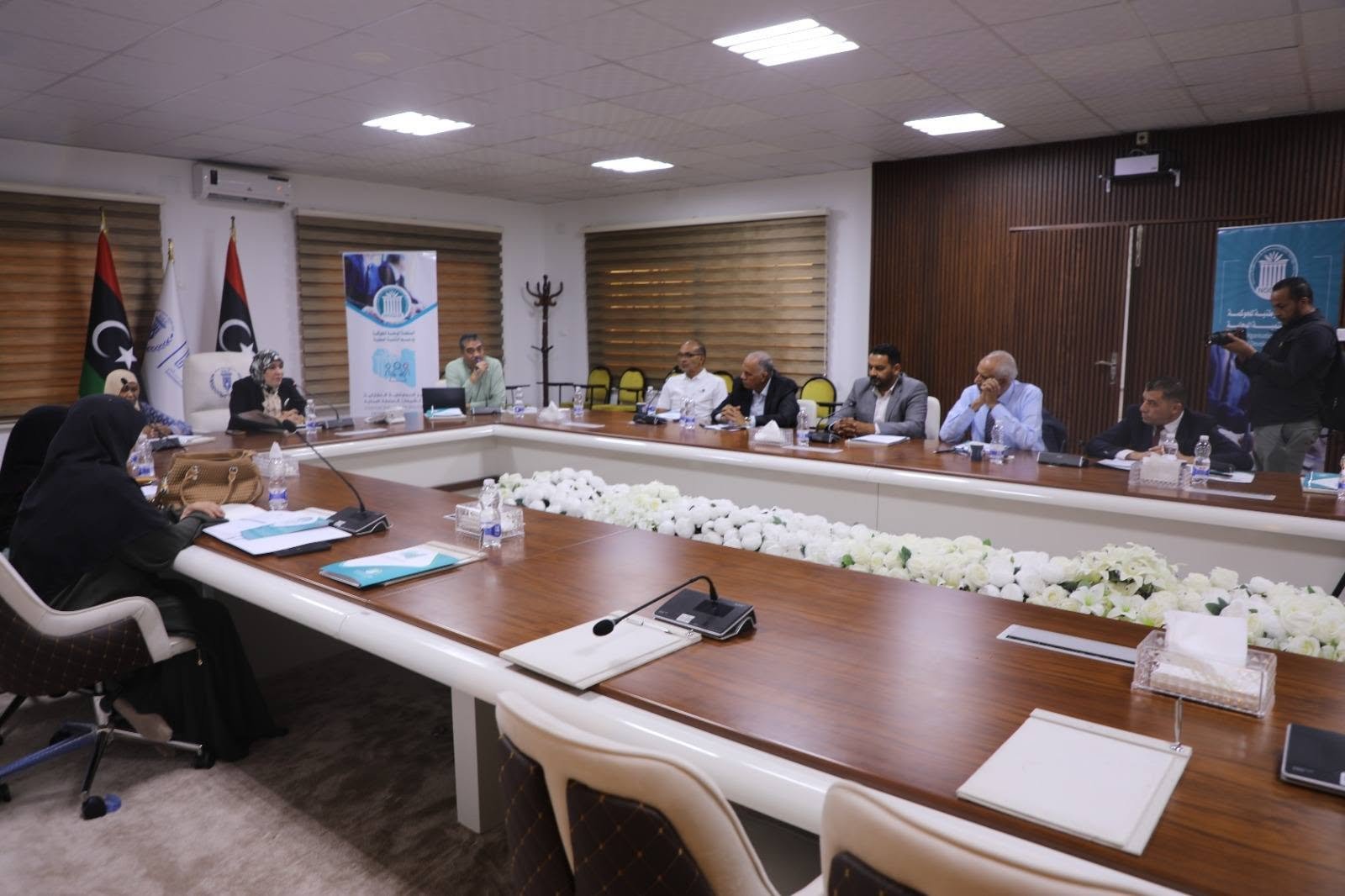
Today, the Local Governance Committee of the House of Representatives (HoR), represented by Ms. Sarah Al-Suwaih and Ms. Fatima Al-Suwaiei, received an initiative titled “Enhancing Participatory Democracy in Local Authority Legislation.” The initiative was prepared under the supervision of the National Organization for Governance and Local Development, with the participation of local governance networks in the municipalities of Suluq, Al-Ghurayfah, and Yefren.
This initiative falls within the framework of supporting community participation in developing the legislation that regulates local administration. It aims to leverage the perspectives of citizens and local actors in drafting the legal framework for local authorities, thereby helping to build a more transparent local administration that is highly responsive to citizens’ needs.
The initiative focused on several key pillars, most notably: reinforcing the principles of transparency and accountability between citizens and municipalities; improving communication channels between municipalities and the public; consolidating the principles of local governance; activating grievance and complaint mechanisms; and ensuring the availability of clear procedures for tracking and addressing citizens’ complaints and feedback.
Furthermore, the initiative included a set of proposals that can be utilized in the new draft law on local administration, which is currently under review by the HoR Local Governance Committee. These proposals aim to contribute to the development of the local administration system and enhance community involvement in local decision-making.
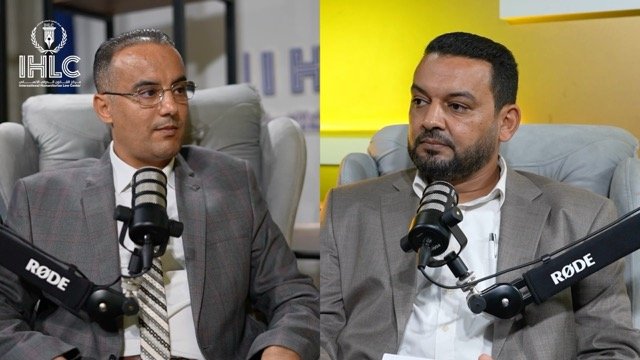
In this context, the International Humanitarian Law Center submitted a proposal to expand the scope of transparency and accountability to include Cabinet decisions related to the division of administrative units and the establishment of new municipalities.
The proposal calls for establishing clear and publicized criteria and regulations for creating municipalities. This ensures that decisions regarding the establishment of new municipalities are based on verifiable, objective criteria—such as demographic, geographic, administrative, economic, and social factors—thereby curbing decisions that may lack unified or clear standards.
The Center also proposed the potential establishment of a specialized technical advisory body or committee. This body would be tasked with preparing and studying the criteria and regulations for creating municipalities and providing technical opinions to the Cabinet prior to the issuance of any decision to establish a new municipality. Such a measure would enhance transparency, standardize procedures, support the principle of equality among regions, and provide a clear institutional and technical basis for decisions related to administrative divisions.
The Center emphasized that enhancing participatory democracy should not be limited to the relationship between the citizen and the municipality. Rather, it must extend to various levels of decision-making related to local administration, including the mechanisms for establishing municipalities, defining their jurisdictions, and drawing their administrative boundaries. This is crucial given that these decisions directly impact administrative organization, local development, and the distribution of resources and services.
At the conclusion of the meeting, the HoR Local Governance Committee welcomed the submitted proposals. The Committee affirmed its openness to benefiting from various opinions and initiatives that would contribute to the development of the new draft law on local administration and strengthen the principles of transparency, accountability, and community participation. This approach supports the development of a comprehensive local administration system that meets citizens’ needs and enhances the efficiency of local institutions.
This step underscores the importance of involving civil society, local actors, and experts in the legislative development process. It ensures that local administration laws remain closely aligned with on-the-ground realities and citizens’ needs, while being better equipped to consolidate the principles of good governance, participation, transparency, accountability, and the rule of law.